The Complete Moving Guide
Moving Planners: The Complete Guide to a Stress-Free Move
Moving is one of the most demanding experiences a household can face. Dozens of decisions compete for your attention at the same time — and one missed detail can cost you money, time, or peace of mind. The right moving planner changes all of that. A well-designed move planner gives you a single place to track every task, manage your budget, log your boxes, and coordinate the people around you — so nothing falls through the cracks before, during, or after moving day.
Whether you’re using a moving organizer for a cross-town apartment swap or a full-scale relocation planner for a long-distance family move, this guide covers everything you need to know — plus the best home moving planners available today, including options you can order right now on Amazon.
Why Moving Is One of Life’s Most Stressful Events
Psychologists consistently rank moving house among the top life stressors — alongside divorce, job loss, and bereavement. That’s not an exaggeration. A typical household move involves sorting and packing hundreds of possessions, coordinating with movers or rental trucks, juggling utility companies across two addresses, updating dozens of accounts and subscriptions, and keeping daily life running during the entire process.
Here’s what typically goes wrong without a proper system:
- Packing overwhelm — no room-by-room system leads to boxes that mix contents from different areas of the house, making unpacking a nightmare.
- Forgotten utilities — electricity, gas, broadband, and water need advance notice. Missing the window means days without service.
- Budget overruns — moving costs add up fast: boxes, tape, movers, van hire, cleaning supplies, tip money. Without a budget tracker, costs spiral.
- Lost or mislabeled boxes — a box labeled “misc” tells you nothing on day one in a new house when you need the kettle and your phone charger.
- Subscription chaos — streaming services, gym memberships, magazine deliveries, and food boxes all need address updates or cancellations.
- Moving day surprises — without a day-of planner, small fires become big delays: the elevator is booked, the key collection time clashes, the van arrives two hours early.
The single most effective thing you can do before any of these problems arise is commit to a structured moving planner from the moment you decide to move.
What Is a Moving Planner?
A moving planner is a dedicated organizational system — most commonly a physical notebook or journal — designed to guide you through every stage of your move. Rather than keeping information scattered across apps, sticky notes, and your memory, a move planner consolidates everything in one place: your timeline, your budget, your packing lists, your inventory, and your contacts.
A good moving organizer does more than list tasks. It structures your move across weeks, builds financial accountability into your planning, and gives everyone in your household a shared reference point. It’s the difference between a move that feels managed and one that feels like it’s managing you.
Moving Planner vs. App vs. Spreadsheet
| Feature | Physical Moving Planner | Moving App | Spreadsheet |
|---|---|---|---|
| Works offline | ✓ Always | ✗ Requires data | ✗ Sync issues |
| Family-friendly sharing | ✓ Pass it around | ✗ Separate logins | ✗ Editing conflicts |
| No setup or learning curve | ✓ Open and write | ✗ Account needed | ✗ Build from scratch |
| Budget + inventory in one place | ✓ Pre-printed pages | ✗ Usually separate | ✗ Manual design |
| No screen fatigue | ✓ Zero screen time | ✗ Adds screen time | ✗ Screen-dependent |
| Permanent record of your move | ✓ Keep forever | ✗ Subscription risk | ✗ File management |
| Ready to use immediately | ✓ No design needed | ✗ Download required | ✗ Hours of formatting |
The key advantage of a physical moving notebook is its simplicity. There’s nothing to configure. You open it and start planning. For families, it becomes the shared communication hub that keeps everyone on the same page — literally.
Ready to Plan Your Move?
Get the Home Moving Planner Checklist — rated 4.8★ by 1,200+ Amazon customers.
Features Every Best Moving Planner Should Include
Not all moving planners are created equal. The best options go far beyond a simple checklist. Here are the sections and features to look for when choosing your relocation planner.
8-Week Moving Timeline
Week-by-week task breakdown from the decision to move through settling in.
Budget Tracker
Set your moving budget, track quotes, deposits, and actual costs in real time.
Packing Checklist
Room-by-room lists so every item in your home gets packed systematically.
Box Inventory System
Numbered box log that tells you exactly what’s in every box and where it’s going.
Box Label Templates
Pre-designed labels to mark boxes clearly with room and priority level.
Moving Supplies List
Shopping list for boxes, tape, bubble wrap, markers, and other packing essentials.
Utility Transfer Planner
Track electricity, gas, water, broadband, and council services across both addresses.
Address Change Tracker
Log every place your address needs updating — banks, DVLA, NHS, subscriptions, and more.
Subscription Cancellation Checklist
Never pay for a service at your old address again. Track every subscription to cancel or redirect.
Cleaning Checklist
End-of-tenancy or pre-move-in cleaning tasks for both properties.
Contacts Section
Movers, estate agents, solicitors, utility providers, and emergency numbers — all in one place.
Moving Day Planner
Hour-by-hour schedule to keep moving day on track from first box to final handover.
Calendar Section
Key dates at a glance: exchange, completion, van hire, meter readings, and key collection.
Documents Organizer
Track and store receipts, contracts, insurance documents, and inventory reports.
Emergency Contacts
Plumber, electrician, locksmith, and local emergency numbers at your new address.
Moving Budget Sheets
Dedicated pages for comparing moving company quotes and tallying all expenses.
Why Physical Moving Planners Still Beat Apps
Moving apps have their place. But when it comes to the high-stakes, high-stress process of relocating your entire life, a physical moving notebook or moving organizer has a clear edge in several important areas.
No Battery. No Signal. No Problem.
Moving day is chaotic. You’ll be in stairwells, car parks, and areas with patchy signal. A physical planner works everywhere, every time — no battery anxiety, no data connection needed, no risk of an app update wiping your checklists at the worst possible moment.
The Whole Family Can Use It
Pass it to your partner. Leave it on the kitchen counter. Hand it to the removals team. A physical home moving planner is instantly accessible to everyone involved in your move — no logins, no shared accounts, no “I don’t have that app” moments.
Screen Fatigue Is Real
During a move, you’re already drowning in emails, messages from movers, utility company portals, and online forms. Adding another digital tool compounds that overwhelm. Writing in a planner is a deliberate, focused act that helps you think clearly instead of reacting to screens.
It Becomes a Permanent Record
When the move is done, your planner contains a full record of everything: what you spent, who moved you, when utilities were transferred, and what was in every box. That’s useful for insurance claims, tax records, or simply knowing where your favourite vase ended up.
| Scenario | Physical Planner | Moving App |
|---|---|---|
| Moving van arrives early | ✓ Grab and go | ✗ Phone unlocking required |
| Partner needs to check the box list | ✓ Hand it over | ✗ Needs their own login |
| No Wi-Fi at new property | ✓ Always works | ✗ App may not sync |
| Budget overrun discovered at midnight | ✓ Open and review instantly | ✗ Need to charge phone first |
| Post-move reference (insurance, tax) | ✓ Physical permanent record | ✗ Risk of data loss if app closes |
For anyone serious about an organized move, a physical best moving planner is an investment that pays for itself many times over in time saved and stress avoided.
Save 50% vs. Moving Chaos
The Guided Planners Home Moving Planner is available now with Amazon Prime Shipping.
The Guided Planners Home Moving Planner
If you’re looking for the most complete, well-structured home moving planner available today, this is it. The Guided Planners Home Moving Planner Checklist Large was designed to handle every aspect of a household move in a single, large-format book — no juggling separate tools, no missing sections.
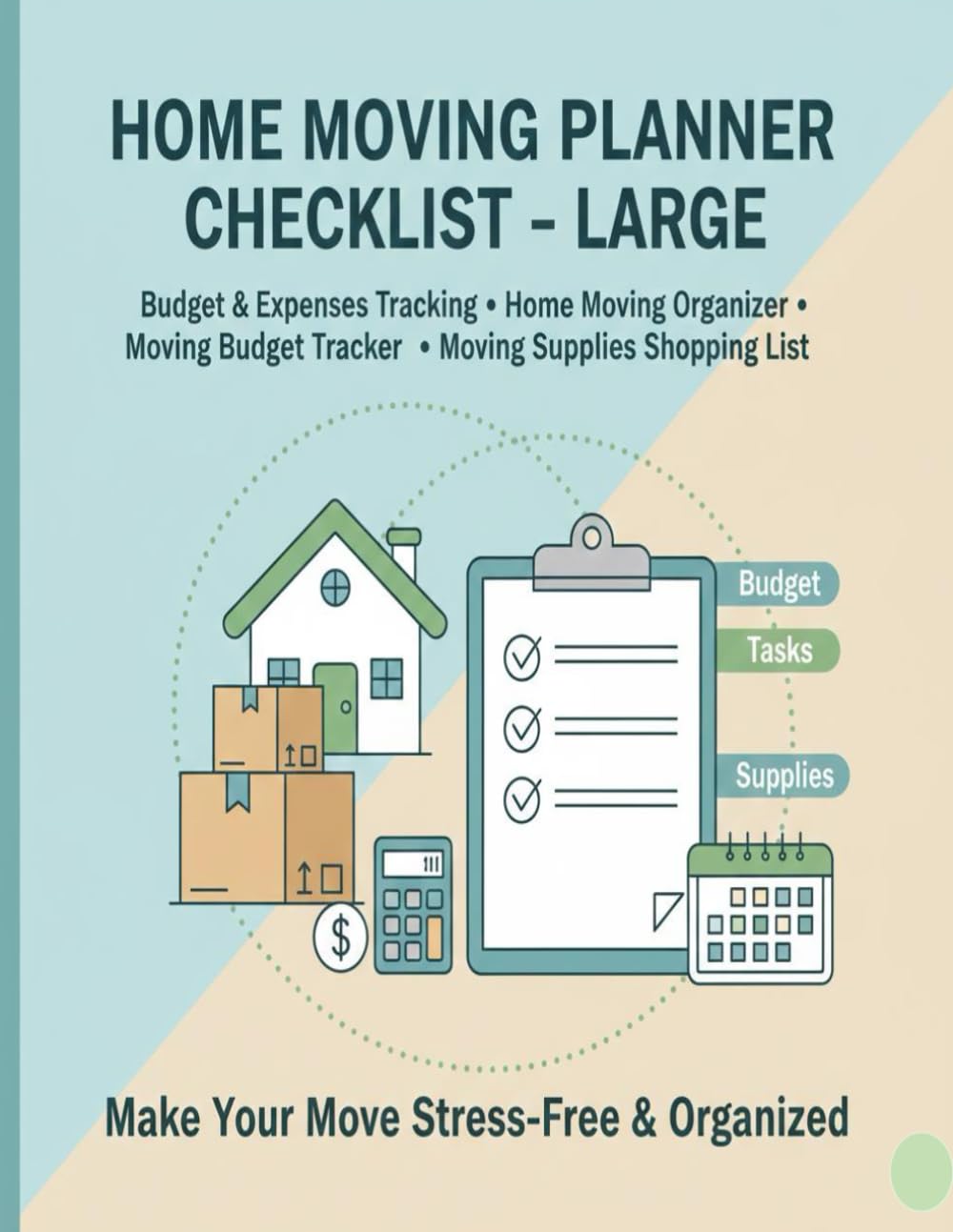
Home Moving Planner Checklist Large
Budget & Expenses Tracking · Moving Organizer Checklist · Moving Budget Tracker · Moving Supplies Shopping List
- Large-format pages — easier to write, easier to read
- Dedicated moving budget sheets with expense columns
- Complete room-by-room packing checklists
- Numbered box inventory system
- 8-week moving timeline with weekly task breakdowns
- Utility transfer and address change pages
- Moving day hour-by-hour planner
- Emergency contacts and documents organizer
- Available on Amazon with Prime Shipping
This planner is ideal for families, couples, and individuals moving into rented accommodation, purchased homes, or new builds. It works equally well for first-time buyers stepping into homeownership as it does for seasoned movers who simply want a more organized process this time around.
You can also explore the full moving planners collection or read our complete guide to the Home Moving Planner for a deeper look at how each section works.
How to Use a Moving Planner Successfully
A move planner is only as good as how you use it. Here’s the eight-step process that gives you the most organized, least stressful move possible. You can also check our complete moving checklist guide for a step-by-step breakdown of every task.
-
1
Start 8 Weeks Before Moving Day
Open your planner on week eight and work forward. Use the timeline pages to assign tasks to each week. Research and book your removal company or van hire — the best ones book fast, especially for weekend moves. Inform your landlord or estate agent of your intended move date.
-
2
Create a Moving Budget
Use the dedicated moving budget sheets to list every anticipated cost: removal company, packaging materials, storage, cleaning, key cutting, deposits, and contingency. Compare at least three removal quotes and log them in your planner. Knowing your number prevents the most common source of post-move regret.
-
3
Inventory Every Room
Go room by room with your moving organizer. List the contents of each space and note large items that need special handling. This inventory becomes the basis for your packing checklists and your box log — you’ll thank yourself on unpacking day.
-
4
Transfer Utilities and Update Accounts
Start notifying utility providers four to six weeks before your move. Use the utility transfer pages in your relocation planner to log the name, phone number, account reference, and planned transfer date for each provider. Do the same for your address change list — bank, DVLA, GP, employer, and subscriptions.
-
5
Track and Cancel Subscriptions
Use your subscription cancellation checklist to audit every service tied to your old address. Streaming platforms, gym memberships, meal kits, magazine deliveries, and local club memberships all need action — either a redirect, a pause, or a cancellation.
-
6
Pack and Label Boxes Systematically
Give every box a number. Write that number in your box inventory log alongside the room destination and a brief contents summary. Label the top and at least one side of each box. Essentials boxes — the ones you’ll need on night one — should be clearly flagged and loaded onto the van last.
-
7
Prepare Your Moving Day Essentials
Use the moving day planner section to build an hour-by-hour schedule. Pack a personal bag with everything you’ll need for the first 24 hours: phone charger, toiletries, a change of clothes, snacks, cash, and any documents you’ll need on the day. Keep your planner in this bag too.
-
8
Unpack Strategically
Cross-reference your box inventory to direct every box to its correct room immediately. Start with the kitchen, then bedrooms, then living spaces. Use the remaining pages in your planner to log punch list items — things to fix, items still to buy, and tasks to complete in your first week as you settle in.
Recommended Planners for New Homeowners
Moving into a new home is just the start. Once you’re through the door, there’s a new set of organizational challenges: maintenance schedules, renovation budgets, utility contracts, and bill management. These home project planners from Guided Planners are designed specifically for that next chapter.
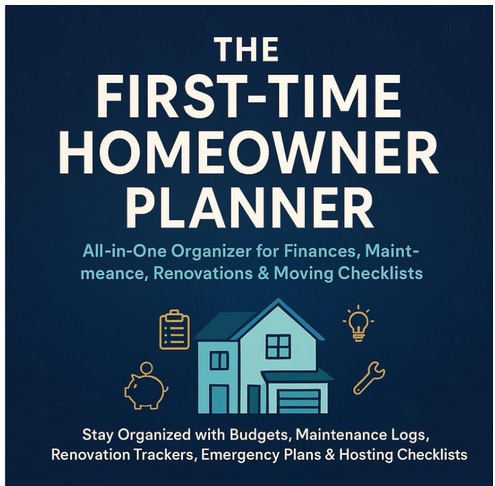
The First-Time Homeowner Planner
Everything first-time buyers need in one book: moving checklists, maintenance logs, renovation budgets, and seasonal home care schedules. A must-have for anyone stepping into homeownership for the first time.
🛒 AmazonView Product
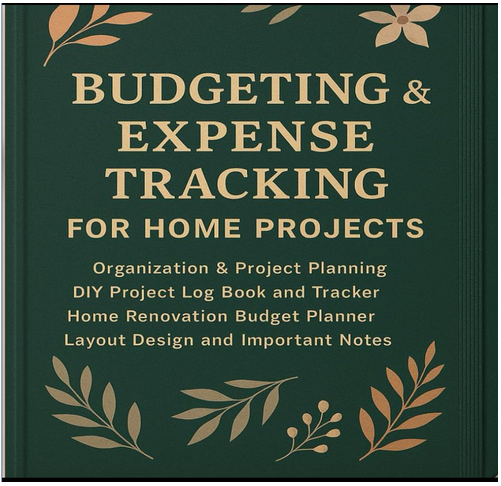
Budgeting & Expense Tracking for Home Projects
Perfect for DIY renovators and home improvers. Track costs across multiple projects, compare contractor quotes, and keep renovation spending under control from day one.
🛒 AmazonView Product
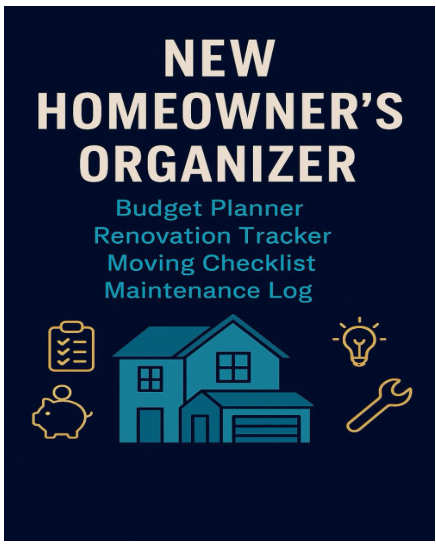
New Homeowner Organizer
Organize your property records, maintenance history, contractor contacts, and renovation plans in a single dedicated organizer. An essential companion once the moving boxes are unpacked.
🛒 Amazon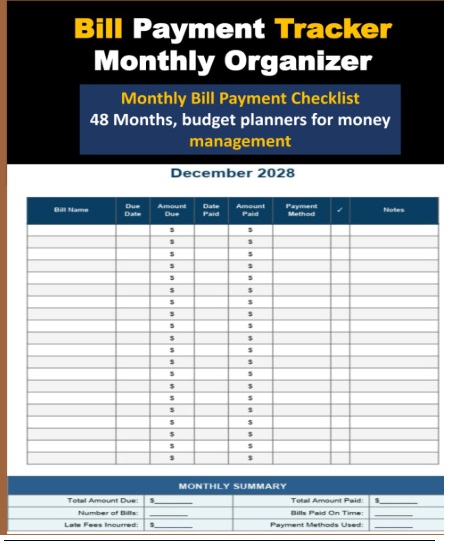
Bill Payment Tracker Monthly Organizer
Stay on top of monthly outgoings with a dedicated bill tracker. Log due dates, amounts, and payment confirmations for every household expense — utilities, rent or mortgage, insurance, and more.
Available on Amazon
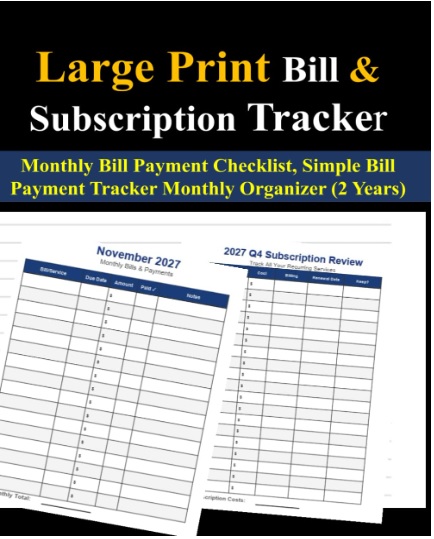
Large Print Bill & Subscription Tracker
Designed for easy readability with extra-large text and clear layouts. Track subscriptions, monthly bills, and financial commitments without squinting — a practical choice for all ages.
Available on Amazon
You can also read our complete guide to the First-Time Homeowner Planner and our full guide to managing your first home for more help with the transition into homeownership.
Plan Your Move. Then Manage Your Home.
Browse the complete Guided Planners collection — from moving to maintenance, one planner for every stage.
Frequently Asked Questions About Moving Planners
Got a question about choosing or using a moving planner? Here are answers to the most common questions from people planning a move.
What is a moving planner?
What is the best moving planner?
Are moving planners worth buying?
How early should I begin planning a move?
What should be included in a relocation planner?
Can a moving notebook replace apps?
Do moving planners save money?
Can families share one planner?
What is a moving organizer?
What is the difference between a moving planner and a moving checklist?
What should I pack first?
How do I avoid losing boxes during a move?
What are home moving planners best used for?
When should I start transferring utilities?
Is a move planner useful for renters too?
Related Resources
Looking for more help with your move or your new home? These guides cover every stage of the journey — from the first box you pack to your first year as a homeowner.
Why Thousands of Families Choose Guided Planners
Guided Planners was built on a single idea: the tools you use to organize your life should be as well-designed as the rest of your home. Every planner in the range — from moving organizers to first-time homeowner guides — is created by people who understand the real stresses involved and have designed around them, not just printed a generic list.
What Customers Are Saying
“We moved with three kids and a dog — I genuinely don’t think we’d have survived without this planner. Everything was in one place and my husband could actually help because it was physical and in the kitchen.”
“The budget pages alone saved us. We were heading for a £400 overrun before I spotted it in the tracker. Fixed it by finding a cheaper van hire. Highly recommend for anyone who actually wants to control their moving costs.”
“First time buyer and first time mover. This planner made me feel like I actually knew what I was doing. The utility transfer section especially — I’d never have thought about half of those things on my own.”
Make Your Move the Organized One
Join 1,200+ satisfied customers. Get the Home Moving Planner now with Amazon Prime Shipping.
The Bottom Line on Moving Planners
A move is never just about boxes and vans. It’s one of the most logistically complex things most families do — and the gap between a smooth move and a chaotic one often comes down to whether you had a reliable system in place from the beginning.
The best moving planners give you that system without requiring you to build it yourself. They handle the structure so you can focus on the decisions. They keep your budget visible, your tasks sequenced, and your family aligned — from the first week of planning to the last box unpacked.
Whether you choose a dedicated relocation planner, a complete moving organizer, or a comprehensive home moving planner like the one from Guided Planners, the investment pays back immediately in time saved, stress avoided, and money tracked. Your move deserves a proper system. Pick up your planner, open it to week eight, and start.