Learning how to use a guided planner for productivity changed the way I work, plan, and show up every single day.
I know that sounds like a bold claim. But hear me out.
Before I started using a guided planner, my mornings looked like this: stare at a blank to-do list, feel immediately overwhelmed, do the easiest tasks first, and wonder at 6 PM why nothing important actually got done.
Sound familiar?
Here’s the thing — most people don’t have a time management problem. They have a clarity problem. They don’t know what to do first, why it matters, or how to make their goals feel real instead of abstract.
That’s exactly what a guided planner fixes.
I’ve spent over five years designing, testing, and refining digital planners and productivity tools at Guided Planners. I’ve watched people go from scattered and stressed to focused and consistent. And the difference almost always comes down to one thing: using a planner that guides you — not just one that gives you blank lines.
Let me show you exactly how to use a guided planner to get more done, build better habits, and actually enjoy the process.
What Is a Guided Planner? (And Why It’s Different from a Regular Planner)
A standard planner gives you space. A guided planner gives you direction.
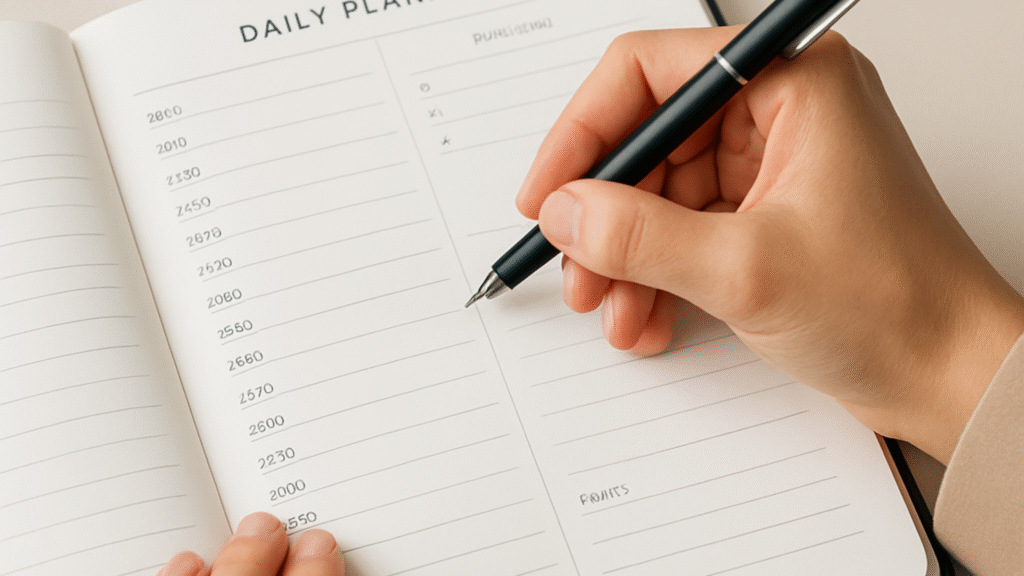
Here’s what I mean. A regular daily planner might have a date at the top and lines beneath it. That’s it. You’re on your own to figure out what goes there and why.
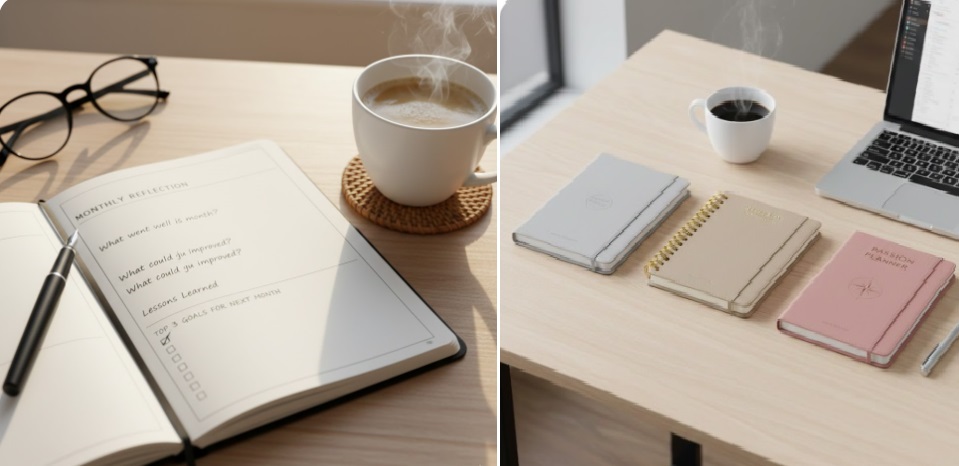
A guided journal planner, on the other hand, walks you through the thinking behind your day. It asks you questions. It prompts reflection. It connects your daily tasks to your bigger goals.
Think of it like the difference between a blank GPS screen and one that gives you turn-by-turn directions. Both can get you somewhere. But one removes the guesswork.
A guided planner typically includes:
- Goal setting prompts that connect your daily actions to long-term vision
- A habit tracker to build consistency over time
- Space for a gratitude journal entry to start the day on a grounded note
- Daily prompts that help you focus on what actually matters
- Time blocking sections for real time management
- Reflection prompts for end-of-day review
This structure is rooted in real psychology. Goal setting theory tells us that specific, written goals with built-in check-ins are dramatically more likely to be achieved than vague intentions. Habit formation research shows that tracking builds accountability. Mindfulness practices reduce decision fatigue. A great guided planner weaves all of this together naturally.
Step 1: Set Your Goals Before You Plan Anything
Every great planning session starts before the first day of the week even begins.
I see so many people skip this and wonder why their planner feels pointless by Wednesday. It’s because they’re filling in tasks without any anchor. Goals are the anchor.
Before you crack open your goal setting planner, ask yourself:
- What do I most want to accomplish this week, month, or quarter?
- What is one area of my life I want to actively improve right now?
- What would make this week feel like a win, even if nothing else goes right?
Write those answers down. Not in your head. On paper (or in a digital planner on your tablet or phone — both work great).
At Guided Planners, I always build a goal-setting section right at the start of every planner I design. It’s not fluff. It’s the foundation everything else is built on.
If you’re new to goal setting and want a simple place to start, grab our free goal planning planner template PDF — it walks you through the whole process step by step.
Step 2: Plan Your Week Before Monday Hits
Sunday planning is one of the most powerful productivity habits I’ve ever built into my own routine.
Every Sunday evening, I sit down with my planner for about 20 minutes. I review what’s coming, what’s still unfinished from last week, and what my top priorities are.
This isn’t about scheduling every minute. It’s about going into Monday with intention instead of reaction.
Here’s a simple weekly planning ritual you can try:
- Brain dump first: Write down everything on your mind — tasks, ideas, worries, errands. Get it out of your head and onto the page.
- Pick your top 3 priorities: What absolutely must happen this week? Circle them.
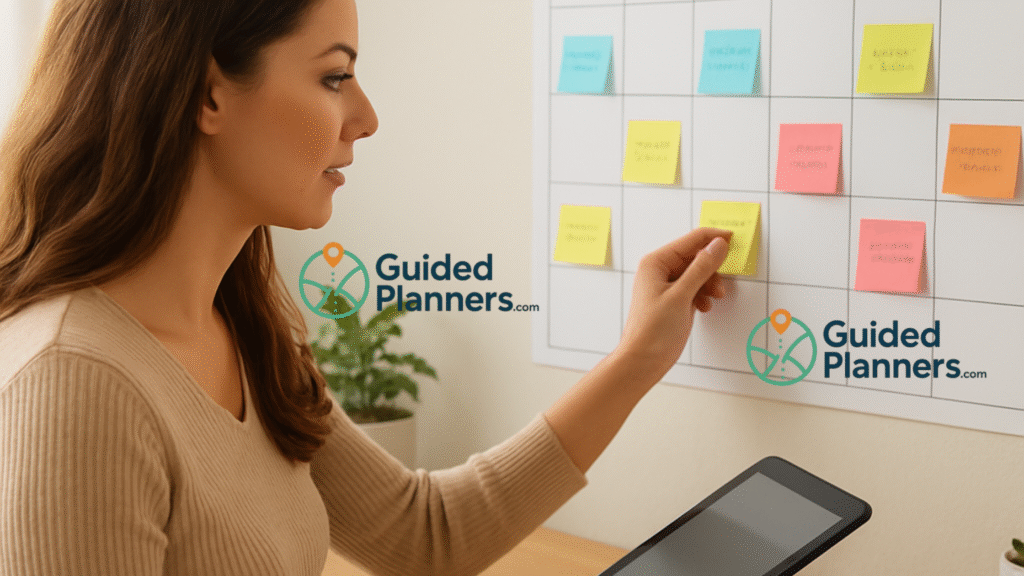
- Time block your priorities: Assign each priority to a specific day and time slot. Calendar it like a meeting.
- Schedule white space: Leave room for the unexpected. Overpacked weeks always blow up.
- Set a self-care intention: Include at least one thing that fills you up — a walk, a workout, a quiet morning. Your self-care journal section is perfect for this.
If you’re a busy mom trying to manage kids, work, and your own goals all at once, our daily weekly planner for busy moms was specifically built around this kind of weekly flow.
Step 3: Use Daily Prompts — Don’t Skip Them
This is where most planner users go wrong. They flip past the prompts and go straight to the task list.
I get it. It can feel like extra work. But those daily prompts are doing something important: they’re helping your brain shift from reactive mode to intentional mode.
Research in cognitive behavioral therapy shows that how we frame our day at the start genuinely affects how we perform and feel throughout it. The prompts aren’t journaling for the sake of journaling. They’re a mental warm-up.
Most guided planners include prompts like:
- What are my top 3 priorities today?
- What am I grateful for this morning?
- How do I want to feel by the end of the day?
- What’s one thing I can let go of or delegate?
I answer these in under five minutes every morning. On the days I skip them, I can always feel the difference.
This is also where your gratitude journal practice lives. Even writing down two or three things you’re grateful for activates a different mental state. It pulls you out of scarcity thinking and into presence. That matters more than any productivity hack I’ve ever tried.
Step 4: Track Your Habits Without Obsessing Over Them
A habit tracker is one of the most powerful tools in any guided planner. But I’ve seen people turn it into a source of guilt instead of momentum.
Here’s how to actually use a habit tracker well:
- Start with 3 to 5 habits maximum. Not 20. Not 10. Three to five. Habit formation science is clear on this — trying to change too much at once leads to failure across the board.
- Track what matters most right now. Sleep, movement, water, a specific daily task, a mindfulness practice — pick things that directly connect to your current goals.
- Focus on streaks, not perfection. Missing one day doesn’t erase your progress. What breaks habits is missing two days in a row. That’s the real rule to remember.
- Review weekly. At your Sunday planning session, look back at your habit tracker. What’s working? What needs adjustment?
Our habit tracker journal with daily, weekly, and monthly planner was designed specifically around this layered approach — so you can see your progress at every level, not just day to day.
Step 5: Use Your Planner for Work AND Life
A lot of people keep a work planner and a personal journal separate. I understand why, but I’ve found that the most productive people integrate both.
When your professional goals and personal intentions live in the same space, you start to see them as connected rather than competing. Your work exists to fund your life. Your life gives your work meaning. They shouldn’t be strangers.
Here’s how I blend them in my own guided planner:
- Morning section: intentions, gratitude, top 3 work priorities
- Day section: time-blocked schedule, task list, meeting notes
- Evening section: what went well, what I’m releasing, tomorrow’s top priority
- Weekly section: habit tracking, goal progress, self-care check-in
For professionals who need a cleaner structure focused on work output, our printable weekly planner for busy professionals is one of my favorites for keeping things tight and focused.
And if you need a shareable work schedule structure, the weekly work schedule template is a clean, practical option that pairs well with your guided planner.
The Difference Between a Digital Planner and a Printable Planner
I get asked this constantly: which is better, a digital planner or a printable planner?
My honest answer: it depends on how your brain works.
Choose a digital planner if you:
- Work primarily on an iPad, tablet, or laptop
- Love the idea of syncing, searching, and organizing without paper
- Want to use planner stickers, digital art, and customization
- Travel frequently and want everything in one place
Choose a printable planner or PDF planner if you:
- Think better when you write by hand
- Want to print and bind your own planner your way
- Prefer the tactile experience of paper
- Like having a physical object you can flip through
At Guided Planners, we offer both. If you’re exploring free options first, our free planners collection is a great starting point. And if you’re team iPad all the way, check out the free digital planner for iPad 2026 — it’s one of the most popular things we’ve made.
Who Benefits Most from a Guided Planner?
The short answer: almost everyone. But let me be more specific.
Busy professionals use guided planners to manage competing priorities, stay on top of project deadlines, and maintain some version of work-life balance.
Entrepreneurs use them to stay in execution mode, track business goals, and break big ideas into daily actions.
Students use them to manage class schedules, study blocks, assignments, and exam prep without losing track of their personal lives.
Self-improvement enthusiasts use them to track habits, set quarterly intentions, and build the kind of consistent routines that actually create change.
Educators and nurses especially benefit from structured daily layouts because their days are high-demand, high-stakes, and constantly shifting. A guided planner gives them a place to land at the start and end of each day.
How to Actually Stick With Your Planner
I’ll be real with you: most people quit their planners within two weeks.
Not because the planner didn’t work. Because they didn’t build the habit of using it.
Here’s what actually helps people stick with it:
- Pair it with something you already do. Put your planner next to your morning coffee. Review it while you wait for your email to load. Attach the new habit to an existing one.
- Keep it visible. Don’t put your planner in a drawer. Keep it on your desk, your nightstand, or open on your home screen.
- Lower the bar. On hard days, even five minutes with your planner is better than nothing. You don’t have to fill every section. Just show up.
- Make it yours. If a section doesn’t serve you, skip it. Add your own notes. Use stickers if that brings you joy. A planner works better when you like looking at it.
- Review every Sunday. This is the glue that holds everything together. Weekly reflection is how you catch what’s slipping and course-correct before it becomes a bigger problem.
FAQs About Using a Guided Planner for Productivity
How long does it take to use a guided planner each day?
Most people spend 5 to 15 minutes with their guided planner in the morning. The evening reflection usually takes another 5 minutes. That’s a total of 10 to 20 minutes per day — a small investment that pays off in focus, clarity, and reduced stress.
What is the best guided planner for beginners?
If you’re brand new to planning, start simple. Look for a guided planner with a clear daily layout, a short goal-setting section, and a habit tracker. Our free planners collection is a great place to begin without any commitment. Try a few formats before investing in one.
Can I use a guided planner if I already use Google Calendar?
Absolutely. A lot of people use digital calendars for scheduling and a guided planner for intentions, goals, and reflection. They serve different purposes. Your calendar tells you where to be. Your guided planner tells you why it matters and how you’re feeling about it.
What’s the difference between a guided journal and a guided planner?
A guided journal tends to focus more on reflection, emotional processing, and mindfulness. A guided planner is more action-oriented — it combines journaling prompts with task management, time blocking, and goal tracking. Many of our planners at Guided Planners blend both, which is what makes them so powerful.
Do guided planners work for people with ADHD?
Yes, and often really well. The structure that a guided planner provides is genuinely helpful for people who struggle with executive function, time blindness, or distraction. The daily prompts act as an external scaffold that helps with task initiation. Shorter check-ins work better than trying to plan an entire week at once.
Is a digital planner or printable planner better for productivity?
Neither is objectively better. It depends on your workflow and what keeps you engaged. I’ve seen wildly productive people use both. The best planner is the one you’ll actually open every day.
Your Productivity Gets Better When Your Planning Gets Intentional
Here’s what I know after five years of designing planners and watching how people use them:
The gap between where you are and where you want to be isn’t a motivation gap. It’s a structure gap.
When you have a guided planner that prompts you, tracks your habits, anchors your goals, and gives you a space for daily reflection — you stop leaving your productivity up to chance. You build a system. And systems beat willpower every single time.
Whether you’re an entrepreneur chasing a big vision, a student juggling five responsibilities, a nurse trying to make it through the week with your sanity intact, or someone who just wants to feel more in control of their own life — a guided planner can be the tool that bridges the gap between intention and action.
Start simple. Stay consistent. Adjust as you go.
And if you want a proven starting point, explore our planners at Guided Planners — including our free goal planning planner template PDF to kick things off without any friction.
Learning how to use a guided planner for productivity is one of the best investments you can make in yourself. And the best time to start is today.
Guided Planners | Planner Design Expert | 5+ Years Creating Productivity Tools for Women, Men, Professionals, Educators & Nurses