If you’ve ever Googled ‘wedding planner guide’ at 11pm in a panic, this is for you.
You’re not disorganized. You’re not behind. You just haven’t had a clear, honest roadmap handed to you yet.
I’ve spent over five years designing digital planners and working with brides, grooms, couples, and moms-of-the-bride who all had the same look in their eyes when they first came to me: overwhelmed, slightly terrified, and trying to hold it all together with a Pinterest board and a group chat.
This guide cuts through all of that.
By the end, you’ll know exactly what to do, in what order, and how to stay sane while doing it. Let’s get into it.
Where Most Couples Go Wrong From Day One
Here’s the truth: most couples start their wedding planning backwards.
They fall in love with a venue, book it, then realize they have zero budget left for a caterer, florist, or DJ.
Or they spend months obsessing over wedding themes and wedding color palettes before they even know how many guests are coming.
I see it every time. And it always leads to the same thing: stress, overspending, and a wedding day that feels more like a sprint than a celebration.
The fix? You need a wedding planning checklist that actually makes sense one that starts with the big three: budget, guest count, and date.
Start With the Wedding Budget Not the Wedding Dress
I know. The dress is more fun. But your wedding budget is the foundation that everything else is built on.
Before you fall in love with a luxury wedding venue or start pulling inspo for floral arrangements, sit down and answer three questions:
- What is the total number we are working with?
- Who is contributing (family, us, both)?
- What are our non-negotiables?
Once you have those answers, you can build a budget breakdown that reflects what actually matters to you not what some wedding blog told you to spend.
I also recommend checking out how to save money on your wedding it’s packed with real tips that don’t feel like you’re cutting corners.
Build Your Wedding Timeline Before You Book Anything
Your wedding timeline is basically your wedding’s operating system.
Without it, everything from your wedding ceremony to your wedding reception runs on vibes — and vibes don’t keep the caterer on schedule.
Here’s a simple wedding timeline template to work from:
- 12 months out: Set your date, nail your budget, start your venue search
- 10 months out: Book your wedding photographer, wedding videographer, and caterer
- 8 months out: Lock in your florist, wedding decorator, DJ or live band
- 6 months out: Send save the dates, finalize your bridal party, order your bridal gown
- 4 months out: Send wedding invitations, nail down RSVP management
- 2 months out: Finalize your wedding day schedule, confirm all vendor contracts
- 2 weeks out: Do a final headcount, confirm every vendor one more time
Does this feel like a lot? It is. But when it’s mapped out in front of you, it becomes manageable. That’s exactly why I designed digital planning tools so you’re not juggling this in your head.
Choosing Your Wedding Venue What No One Tells You
Your wedding venue is the single biggest decision you’ll make.
It sets your wedding theme, limits or expands your guest count, and directly impacts almost every other vendor you’ll hire.
Here’s what I tell every couple I work with: visit at least three venues before you commit. And bring your questions, not just your emotions.
Ask about:
- Capacity for your wedding guests
- What’s included (tables, chairs, wedding lighting, parking)
- Vendor restrictions can you bring in your own caterer?
- Noise restrictions for your DJ or live band
- Backup plans for outdoor weddings (weather!)
- What the contract says about cancellations
Whether you’re dreaming of a beach wedding, a rustic wedding, a garden wedding, or a luxury wedding venue the process is the same. Ask smart questions and read every word of that vendor contract.
How to Hire Wedding Vendors Without Losing Your Mind
Wedding vendors are the people who turn your vision into reality. And hiring the wrong ones is one of the most expensive wedding planning mistakes you can make.
Here’s who you need to book and roughly in what order:
1. Wedding Photographer & Videographer
These get booked first because the best ones fill up fast. Your wedding photographer will capture memories that last forever this is not the place to cut corners.
2. Caterer
Food is the experience your guests remember. Book early, do a tasting, and get everything in writing.
3. Florist & Wedding Decorator
Your floral arrangements and table settings bring your wedding color palette to life. Share your vision in detail bring photos.
4. DJ or Live Band
Music shapes the entire energy of your wedding reception. See them perform live if possible before signing anything.
5. Hair Stylist & Makeup Artist
Book early, schedule a trial run, and make sure they’ve worked with your hair type and skin tone before.
6. Wedding Officiant
Whether you want traditional or personalized vows, your officiant sets the tone for your whole wedding ceremony. Meet with them beforehand chemistry matters here.
5 Wedding Planning Mistakes That Cost Couples Big
I’ve seen these mistakes happen over and over. Learn from them now so you don’t pay for them later.
Mistake #1: Skipping the written contract. Every vendor, no exceptions. If it’s not in writing, it doesn’t count.
Mistake #2: Not planning for overtime. Weddings almost always run long. Build buffer time into your wedding day schedule.
Mistake #3: Underestimating RSVP management. People don’t RSVP on time. Build in a follow-up process and a firm cutoff date.
Mistake #4: Forgetting the little extras. Wedding décor, wedding lighting, tips for vendors these add up. Budget for them from the start.
Mistake #5: Going it alone. Whether you hire a professional wedding coordinator or use a solid digital wedding planner binder, you need a system. Relying on memory and sticky notes will burn you out.
Planning a Destination Wedding? Here’s What Changes
A destination wedding is a dream — and it comes with a different set of logistics.
First, your timeline gets longer. Start planning 18 months out, not 12.
Second, your guest list gets smaller. Not everyone can travel, so expect some drop-off and plan your headcount accordingly.
Third, look into destination wedding packages all-inclusive resorts often bundle venue, catering, and even a wedding coordinator in one. It can simplify your life enormously.
And yes, you still need to manage vendor contracts, RSVP management, and a full wedding timeline. Distance doesn’t make those things disappear.
Wedding Trends 2026 Worth Actually Paying Attention To
Not all trends are worth chasing. Here are the ones I’m genuinely excited about:
- Eco-friendly weddings. Sustainable florals, locally sourced menus, and minimal waste setups are having a real moment and they don’t compromise on style.
- Minimalist weddings. Less decor, more intention. Couples are choosing quality over quantity in everything from table settings to bridal party size.
- Cultural wedding traditions. More couples are weaving in meaningful cultural elements — not as a token gesture, but as a real celebration of who they are.
- Digital planning tools. Paper planning is out. Couples want everything organized, accessible, and portable. Digital planners have completely changed how organized couples stay on top of their planning milestones.
A Note for the Mother of the Bride
You have one of the most important and most overlooked roles in this whole process.
You’re coordinating family logistics, managing expectations, supporting the couple, and probably trying to enjoy the moment all at the same time.
That’s a lot. And you deserve your own system.
I designed the Mother of the Bride Organizer Planner specifically for this role to help you stay organized, present, and prepared without carrying the whole wedding in your head.
You can also check out the best wedding planner for the mother of the bride for even more resources tailored to your role.
The Right Wedding Planning Tools Make Everything Easier
Let’s be honest — wedding planning is a project management job.
You’ve got vendors to track, contracts to sign, payments to schedule, guests to manage, and a wedding day schedule to run. Without the right tools, something will fall through the cracks.
Here’s what I recommend keeping organized:
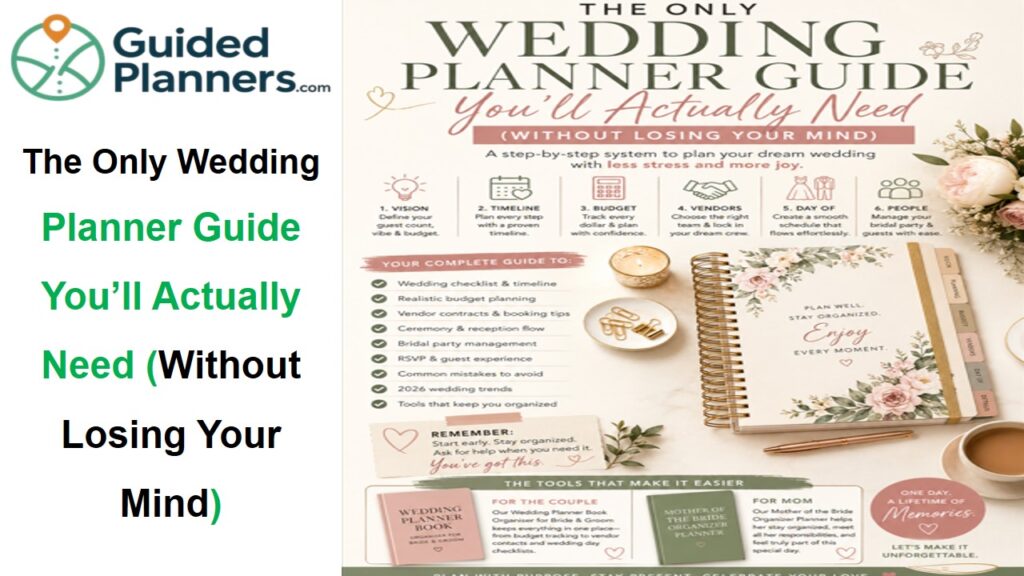
- A dedicated wedding planning checklist (not just a notes app)
- A budget tracker that shows payments due and vendor deposits
- A timeline template you can update as you go
- A vendor log with contact info, contracts, and notes
Our wedding planning checklist has all of this built in designed for real couples, not just aesthetics.
And if you need a serious system for managing your wedding budget, check out the wedding budget planner book and payment tracker it’s built to handle every deposit, payment, and budget shift without you losing your mind.
For couples who want everything in one place, the wedding planner book for bride and groom is the most complete option we offer.
Groom Preparation Is Not an Afterthought
Can we talk about groom preparation for a second?
Wedding planning should not fall entirely on one person. Full stop.
Grooms: you can own logistics. You can manage vendor contracts, handle RSVP management, coordinate with the wedding officiant, or take the lead on music and entertainment.
Dividing up the task management not only keeps things moving — it keeps you both from resenting each other before the wedding day even arrives.
Smart DIY Wedding Ideas That Don’t Look DIY
Not every couple has an unlimited budget. And that’s perfectly fine.
Here are some DIY wedding ideas that can save real money without sacrificing style:
- Design your own wedding invitations. Tools like Canva make this genuinely achievable.
- Create your own wedding décor centerpieces. Simple greenery, candles, and thrifted frames can look expensive.
- Make your own wedding playlist. Spotify is free. Hire a friend to manage it on the day.
- DIY your own favor packaging. Personalized packaging on simple items reads as thoughtful, not cheap.
FAQs: Wedding Planner Guide
How far in advance should I start wedding planning?
For most weddings, 12 months is the sweet spot. If you’re planning a destination wedding or a luxury wedding venue that books up fast, give yourself 18 months.
Do I need a professional wedding coordinator?
Not always. A well-designed digital planner and a solid wedding planning checklist can take you far. That said, if your guest count is 150+, a day-of wedding coordinator is worth every penny.
What’s the average cost of wedding planning tools and planners?
Digital planners run anywhere from $10 to $40. Physical wedding planner binders can cost more. The best investment is something that covers budgeting, timelines, vendor tracking, and guest management all in one place.
What should be in a wedding planning checklist?
At minimum: budget breakdown, vendor list with contacts and contracts, wedding timeline, guest list with RSVP management, wedding day schedule, and bridal party responsibilities.
How do I plan an eco-friendly wedding?
Start with locally grown florals, a plant-based or locally sourced menu, digital wedding invitations (no paper waste), and a venue that has sustainability practices in place.
Can I plan a minimalist wedding on a tight budget?
Yes. A minimalist wedding is one of the most budget-friendly approaches you can take. Focus on fewer elements executed beautifully — a single stunning floral arrangement, a tight guest list, and meaningful moments over elaborate décor.
You’ve Got This — And I’ve Got a Planner for That
Wedding planning is a lot. I won’t pretend otherwise.
But here’s what I know after five-plus years of designing planning tools: when you have the right system, the overwhelm becomes manageable. The chaos becomes a checklist. And the checklist becomes a wedding day you actually enjoy.
Use this wedding planner guide as your starting point. Build your budget, map your timeline, hire your vendors with intention, and track every planning milestone along the way.
And when you’re ready for a tool that holds all of it together one designed by someone who has actually been in the weeds of wedding planning I’ve got you covered.
Browse all Guided Planners wedding tools at guidedplanners.com and find the planner that fits where you are in the process right now.
Because this is your wedding planner guide and you deserve to walk into that wedding day feeling ready.