If you’ve been searching for the best guided digital planners for goal and habit tracking, you already know the problem.
You’ve downloaded apps. You’ve bought cute notebooks. You’ve started fresh on a Monday with the best intentions — and by Wednesday, the whole system is abandoned.
I’ve been there. And after five-plus years of designing digital planners and productivity tools, I can tell you exactly why most planning systems fail — and what the good ones do differently.
The answer is structure. Specifically, guided structure.
A blank page asks nothing of you. A guided planner walks you through exactly what to think about, in what order, so you actually follow through.
Let’s break down what makes a great digital planner for goal setting and habit tracking — and which ones are worth your time.
Why Most Goal Setting Planners Fail After Week One
Here’s what I’ve noticed working with thousands of people who use planners: the tool is rarely the problem.
The problem is that most planning systems ask you to do too much thinking upfront — and then give you zero support in actually following through.
You set a big goal. You write it down. And then Monday hits, and you have no idea what to actually do first.
A guided productivity system solves this by breaking the process into layers:
- Vision. Where do you want to go?
- Goals. What are the specific outcomes you’re working toward?
- Habits. What daily behaviors will get you there?
- Tasks. What needs to happen today?
When a planner connects all four of those layers with prompts, trackers, and reflection pages, people actually use it. That’s what separates a great guided planner from a pretty one.
What the Best Guided Digital Planners Actually Include
I’ve reviewed and designed enough planners to know what separates the ones that collect digital dust from the ones people use for years.
Here’s what a solid guided digital planner should have:
A goal tracking system.
Not just a place to write goals — a system that breaks them down into monthly, weekly, and daily actions. SMART goals aren’t useful if you have nowhere to track your progress against them.
A habit tracker.
Visual habit trackers work because they create a streak you don’t want to break. Whether it’s a simple checkbox grid or a more detailed daily log, this is non-negotiable in a good productivity planner.
Daily and weekly planning pages.
Your daily planner is where intention meets execution. It needs space for your top priorities, task prioritization, time blocks, and a quick brain dump section for everything swirling in your head.
Reflection prompts.
This is where most planners fall flat. A great guided planner asks you to look back — what worked, what did not, what you want to do differently. Structured journaling and reflection prompts are what turn plans into actual learning.
Morning and evening routine pages.
Your morning routine sets the tone for your entire day. Your evening routine closes the loop. A planner that supports both is one that supports your whole life — not just your to-do list.
The Best Guided Digital Planners for Goal and Habit Tracking — Broken Down
I’m not going to throw a list of twenty options at you. You don’t need twenty options. You need the right one for how you actually think and work.
Here’s how I break it down by use case:
Best for Daily Focus and Task Prioritization
If your biggest challenge is getting through the day without losing track of what matters most, you need a daily planner with built-in task prioritization.
Look for:
- A top three priorities section at the start of each day
- Time-blocked scheduling so your day has actual structure
- A brain dump page to offload mental clutter before you start
- An end-of-day reflection prompt so you close out with intention
Our planners at Guided Planners are built with exactly this flow. The goal isn’t to squeeze more into your day — it’s to make sure the right things actually get done.
You can see our full range at the best digital planners.
Best for SMART Goal Setting and Long-Term Planning
If you have big goals but struggle to connect them to your daily actions, you need a planner with a strong planning framework — not just a goal setting worksheet.
The best productivity planners for goal tracking will include:
- An annual or quarterly vision section for big picture goal setting
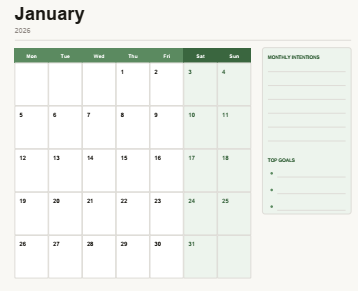
- A monthly planner that translates goals into specific milestones
- A weekly planner that shows you exactly what to work on this week
- An action plan template for each major goal so nothing gets vague
I designed our goal setting planner pages with this exact structure because I watched so many people set goals that were inspiring on January 1st and completely forgotten by February.
The fix is not more motivation. It’s a better system.
Best for Habit Tracker and Accountability Planner Needs
Habit tracking is one of the highest-impact things you can put in a planner — and one of the most commonly done wrong.
Here’s what I’ve learned: tracking too many habits at once kills the whole system.
Start with three to five habits maximum. Track them daily. Review them weekly. Adjust monthly.
Your accountability planner should:
- Give you a visual monthly habit tracker grid (streaks are motivating)
- Include weekly check-ins tied to your habits — not just your tasks
- Have space to note what triggered a missed day (awareness beats guilt)
- Connect your habits back to your bigger goals so you remember why they matter
This is the difference between a habit tracker that’s a chore and one that actually builds self-discipline over time.
Best for Wellness Planner and Mindfulness Planner Needs
Productivity without wellbeing is just burnout on a schedule.
A good wellness planner or mindfulness planner goes beyond tasks and goals. It tracks how you feel, what energy you’re working with, and what you need to sustain your focus over the long haul.
Look for planners that include:
- Daily mood or energy check-ins
- Gratitude and mindfulness prompts built into the daily layout
- Space for morning intention setting and evening reflection
- Self-improvement planner sections that tie personal development to your daily life
Intentional living is not a vibe. It’s a practice. And a good guided planner gives you the structure to practice it every single day.
Digital Planning vs Printable Planner: Which Is Right for You?
I get this question constantly. And honestly, the answer depends on how you work.
Choose digital planning if:
- You work primarily from your phone, tablet, or laptop
- You want your planner available everywhere without carrying anything physical
- You love the flexibility of editing, highlighting, and reorganizing on the fly
- You want to combine planning with digital note-taking apps like Notion or GoodNotes
Choose a printable planner if:
- You think better when you write by hand
- You want something you can keep on your desk as a visual anchor
- You prefer a tactile, unplugged planning experience
- You want to customize your setup month by month with a bullet journaling approach
At Guided Planners, we design both. Our digital planners are built for tablets and desktop use. Our printables are formatted to look polished the second they come off your printer.
If you’re not sure where to start, check out our roundup of best digital planners that actually work for real life — it covers how to pick what works for your actual day, not some idealized version of it.
How to Actually Use a Guided Planner Without Burning Out
Buying a planner is the easy part. Using it consistently is the real work.
Here’s the workflow I recommend to every person who picks up one of our planners for the first time:
Step 1: Do the vision work first.
Before you touch the daily pages, spend 30 minutes on your vision board planning section. What do you want your life to look like in 12 months? Get specific. Write it down in detail.
Step 2: Set your quarterly goals.
Break that big vision into three to five goals for the next 90 days. Make them SMART: specific, measurable, achievable, relevant, and time-bound. This is your planning framework for the quarter.
Step 3: Pick your habits.
Choose three to five daily habits that directly support your goals. Not habits that sound good — habits that actually move the needle. Add them to your habit tracker and commit to tracking them for 30 days before changing anything.
Step 4: Plan your week every Sunday.
Use your weekly planner to map out what you’re working on, what deadlines are coming, and what habits you’re prioritizing. This 20-minute weekly planning session is one of the highest-ROI habits you can build.
Step 5: Do a quick daily check-in every morning.
Open your daily planner. Write your top three priorities. Review your habit tracker. Set one intention for the day. This takes five minutes and completely changes how the rest of your day goes.
Step 6: Close out every evening.
Use your evening routine page to check off what happened, note what did not, and write one thing you are proud of. This reflection practice is what turns daily effort into actual personal development over time.
Who Benefits Most From a Guided Productivity System
I designed Guided Planners for a wide range of people — and what they all have in common is not the same job or lifestyle. It is the same problem: too much on their plate and not enough structure to hold it all.
Here is who gets the most out of a guided productivity system:
- Professionals and entrepreneurs. You need workflow optimization that connects your big projects to your daily task list without losing the thread.
- Women in personal development. Our life planner and self-improvement planner pages were designed with women in mind — covering goals, wellness, relationships, and growth all in one place.
- Educators and nurses. High-demand schedules need tight time management. A focus planner with daily and weekly views helps these professionals protect their energy and stay on top of what matters.
- Anyone building a new habit or breaking an old one. The habit tracker pages alone are worth it. Watching your streak build is one of the most effective motivation techniques I know.
Want to see how our planners are ranked against others on the market? Check out best digital planners 2026 — tested, ranked, honest picks for a full breakdown.
The Productivity Habits That Actually Change Your Life
Planning tools only work when the habits behind them are real.
Here are the success habits I’ve watched make the biggest difference for people who use our planners:
- The Sunday reset. Review the past week, plan the next one, set your top goals. Twenty minutes every Sunday saves you hours of confusion during the week.
- The brain dump before bed. Write everything in your head onto the page before you sleep. You will sleep better and start the next day clearer.
- The one-thing rule. Every day, identify the single most important task. Do that one first, before anything else. This is task prioritization at its most effective.
- Monthly reflection. At the end of each month, review your habits, check your goals, and adjust. Most people never pause to do this — which is why most people feel like they are always starting over.
- Connecting habits to identity. The most powerful shift in mindset coaching is moving from ‘I want to do this’ to ‘I am someone who does this.’ A guided planner helps you track the evidence of that identity every single day.
What Makes Guided Planners Different From Every Other Option
There are a lot of planners out there. I know, because I have reviewed most of them.
Here is what I kept seeing: beautiful design, zero guidance.
Gorgeous layouts with blank lines and no prompts. Habit trackers with no connection to actual goals. Weekly planners with no space for reflection.
That is not a planner. That is an expensive notebook.
Every Guided Planner we create is built around a planning methodology that actually works. The pages flow in a logical sequence. The prompts are specific and actionable. The structure supports both big-picture vision board planning and ground-level daily execution.
You can browse our complete 2026 lineup at best digital planners to buy: your complete 2026 guide — it covers every style and use case we offer.
And if you are still figuring out which digital format works best for your lifestyle, best digital calendars in 2026: what actually works and what’s just hype is a great place to start.
FAQs: Best Guided Digital Planners for Goal and Habit Tracking
What is a guided digital planner?
A guided digital planner is a structured planning tool — available as a digital file, app, or printable — that includes prompts, templates, and frameworks to help you set goals, track habits, and manage your time. Unlike a blank planner, a guided one tells you exactly what to think about and when.
What is the best digital planner for habit tracking?
The best habit tracker is one that shows you your streaks visually, connects your habits to your goals, and includes a weekly check-in to review progress. Our accountability planner pages at Guided Planners are built around exactly this approach.
How do I set SMART goals in a planner?
SMART goals are specific, measurable, achievable, relevant, and time-bound. A good goal setting planner will have a dedicated section that walks you through each of these criteria — not just a blank line labeled ‘goals.’
Can I use a digital planner on my phone?
Yes. Most Guided Planners digital formats are compatible with GoodNotes, Notability, and PDF annotation apps on iPad and tablet. Some formats also work on phones, though a tablet gives you a much better planning experience.
How many habits should I track at once?
Start with three to five. Tracking too many habits at once is one of the fastest ways to abandon the whole system. Build consistency with a small number first, then expand once the routine feels automatic.
Do I need a separate planner for work and personal life?
Not necessarily. A well-designed life planner covers both — with sections for professional project planning, personal development, wellness, and habit tracking all in one place. That integration is actually one of the biggest advantages of a guided productivity system over separate, siloed tools.
Ready to Find the Best Guided Digital Planner for Your Goals?
You do not need a hundred apps, a new notebook every January, or another motivational quote on your wall.
You need one solid guided system that connects your vision to your daily habits — and actually fits how you live and work.
That is what we build at Guided Planners. Every product we design comes from five-plus years of working with real people who had big goals and needed better tools to reach them.
Browse our full collection at the best digital planners for 2026 and find the best guided digital planner for goal and habit tracking that fits your life right now.